Habemus Episcopum – We Have a Bishop
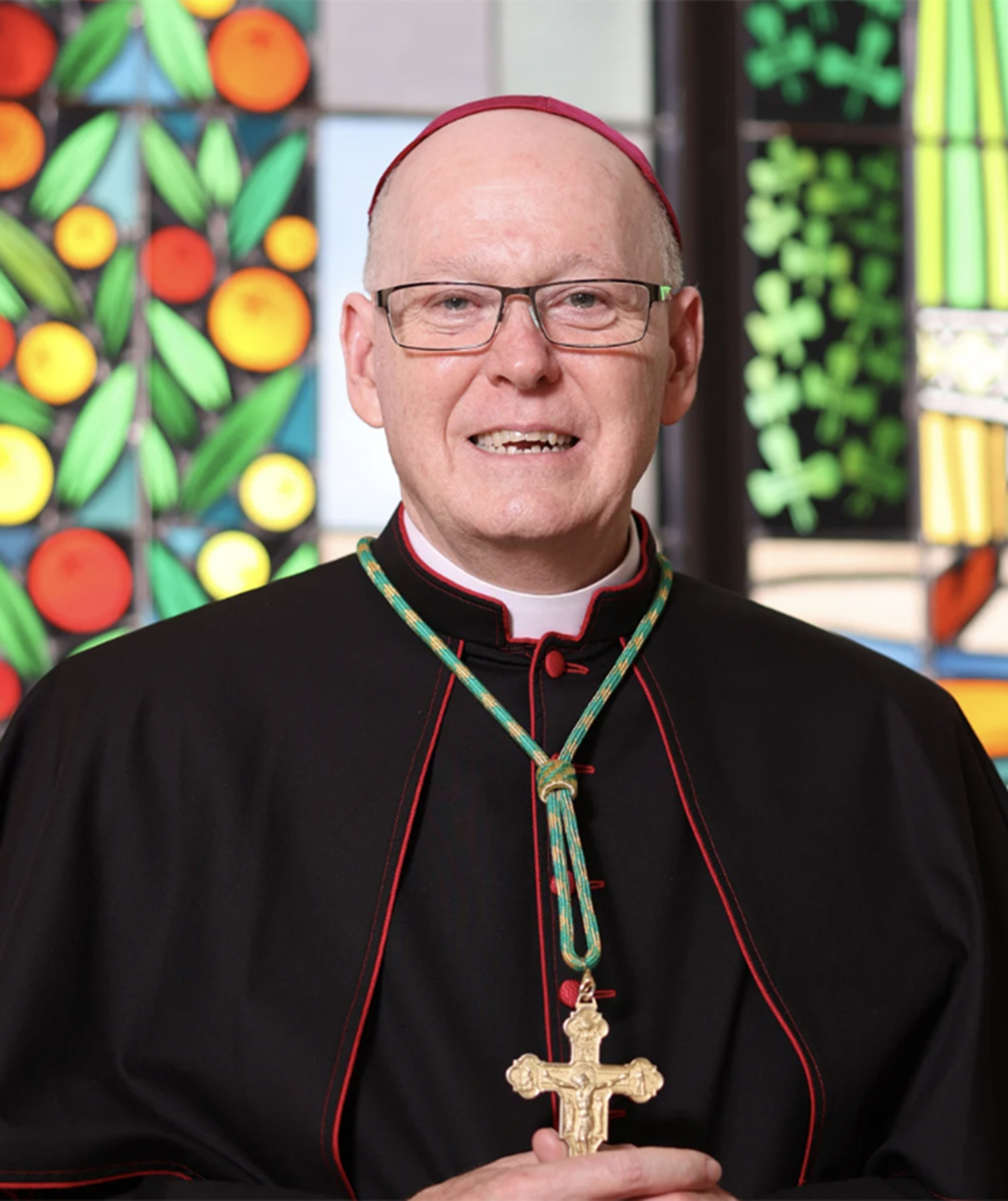
On November 11, Bishop Brandon Cahill will be installed as the 7th Bishop of the Diocese of Joliet in the Cathedral of St. Raymond Nonnatus. At this ceremony, one can expect over 200 priests and deacons, members of religious orders, several bishops and representatives of every parish of our diocese. This will be a great joy since only a bishop has the special apostolic mandate to shepherd the flock a diocese. The Diocese of Joliet serves just under a half-million Catholics in a geographic area of 4,218 square miles in DuPage, Will, Kankakee, Grundy, Ford, Iroquois and Kendall counties.
Bishop Cahill was raised in Houston, Texas, and has a PhD in Fundamental Theology from the Pontifical Gregorian University in Rome. He was a rector of the Houston Theological Seminary for nine years, and most recently served as the Ordinary bishop of the Diocese of Victoria, Texas, for the last 10 years. Beginning with the day of his installation, his name will be mentioned during every Mass at every church and chapel in our diocese until the conclusion of his ministry at the Diocese of Joliet. As Canon Law requires, when bishops turn 75, they are obliged to present a letter of resignation to the Holy Father. Therefore, our new bishop will most certainly walk with us in our journey of faith for the next 12 years. Brothers and sisters, let us welcome him cordially and continually support him through our prayers.
Bishop Cahill's installation is a good occasion to remind ourselves about the basic structure of the Church. Jesus gave the Apostles an order and mandate to evangelize the entire world. However, this mission has to be conducted in an orderly and organized way. The Church's teaching must be precise and clear, and Her message needs to be promulgated efficiently. The Church has to manage well the material means for celebrating the sacraments, Her teaching and charitable works. To this end, the Church has a very precise structure that is logically and precisely regulated by Canon Law. The Universal Church is divided into dioceses, or some other ecclesiastical entities, that are directly dependent on the Holy See. One example of these entities is Opus Dei. Even religious orders like the Franciscans, Dominicans, Benedictines, etc. whose basic structures usually serve more than one diocese are subject to the rule of the local bishop.
Larger dioceses could have several bishops but only one is named an "Ordinary" bishop. The other bishops are auxiliary bishops like Bishop Dennis Spies of our diocese. The real and full power of ruling and ministering in the diocese belongs exclusively to the Ordinary Bishop and no one else. The Ordinary Bishop is directly responsible to the Holy Father and to the Nuncio, ambassador of the Vatican and the Pope's representative in a specific country. It is the Nuncio, currently Archbishop Gabriele Caccia in Washington, DC, who sends the proposals for episcopal nominations to the Holy Father. The Nuncio presents three names of candidates, with the first on the list as the most preferable. The Pope is not obliged by the Nuncio's suggestion and can elect any person from the presented list or anyone else. The title "cardinal," which is given to some bishops, does not give any additional governing power to them since they are still bishops like other Ordinary Bishops. The only difference is that cardinals have the right to elect the Pope and are close collaborators of popes in their mission of evangelization.
The installation of the bishop as an Ordinary is not an additional ordination of a person who is already a bishop. From Apostolic times, the Catholic Church recognizes the ordination to the priesthood with three separate levels: deacon, presbyter (priest), and bishop. All parts of the Church: clergy, religious brothers and sisters, and laity are called to work together diligently in delivering to the world the Good News. Let us all be called to take an active part of this mission and contribute to the building of the Mystical Body of Christ in this world.
Fr. Mark Jurzyk